
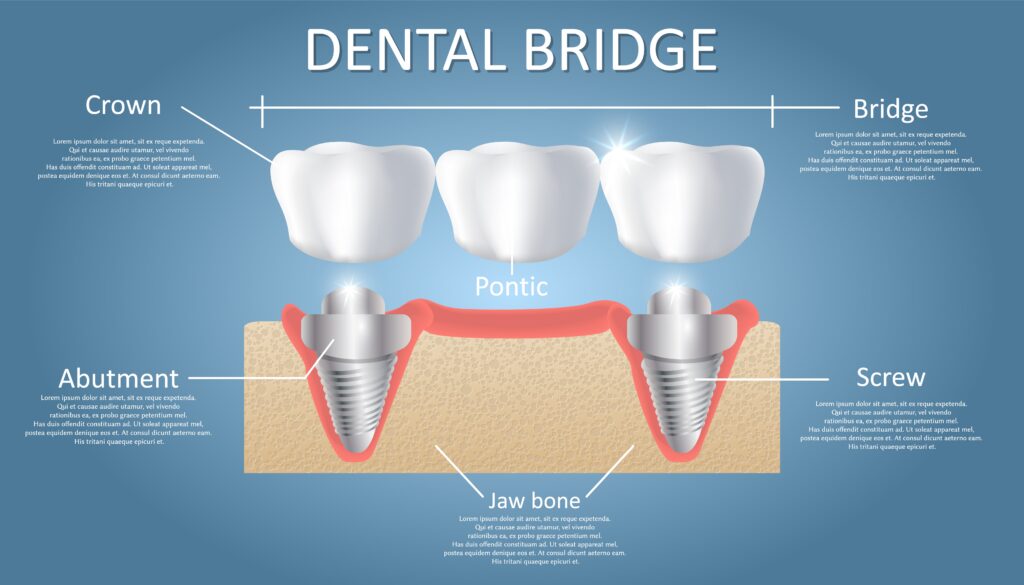
What Are Dental Bridges?
Dental bridges are devices that replace missing teeth. They fill the gap where one or more teeth are lost. Usually, a dental bridge uses nearby teeth for support. Dentists often recommend dental bridges to restore your smile and help you chew better. According to the American Dental Association, dental bridges are a safe and common solution for tooth loss.
Types of Dental Bridges
There are several types of dental bridges. Each type has its own benefits. Your dentist will help you choose the best one for your needs. Here are the main types:
Benefits of Dental Bridges
Dental bridges offer many benefits. For example, they help you chew food more easily. They also improve your speech. In addition, dental bridges keep your other teeth from shifting. Here are some key benefits:
Who Needs a Dental Bridge?
Anyone with one or more missing teeth may need a dental bridge. However, you must have healthy teeth or implants next to the gap. People who want a fixed, non-removable solution often choose dental bridges. If you have trouble chewing or speaking due to missing teeth, a dental bridge can help. Your dentist will check your mouth and suggest the best option.
The Dental Bridge Procedure (Step-by-Step)
The dental bridge procedure usually takes two or more visits. Here is what you can expect:
Sometimes, more visits are needed for adjustments. Your dentist will guide you through each step.
Aftercare and Maintenance Tips
Proper aftercare is important for your dental bridge. With good care, your bridge can last many years. Here are some tips:
Risks and Possible Complications
Dental bridges are safe, but some risks exist. For instance, you may feel some tooth sensitivity after the procedure. Sometimes, the bridge may become loose or fall out. In rare cases, the supporting teeth may get cavities or infections. However, regular dental visits help catch problems early. If you notice pain, swelling, or a loose bridge, contact your dentist right away.
Prevention and Oral Hygiene Tips
Good oral hygiene helps prevent problems with dental bridges. For example, brushing and flossing keep your teeth and gums healthy. Here are some easy tips:
Conclusion
Dental bridges can restore your smile and improve your quality of life. They are a safe and effective way to replace missing teeth. If you think you may need a dental bridge, consult your dentist at LUMOS DENTAL CARE to find out if a dental bridge is right for you.